

Crawl Space Vapor Barrier in Gustine, CA
A crawl space vapor barrier in Gustine, CA fails at the seams, not the middle. We lap 12 inches, tape every joint and wrap the piers. Specs in writing.
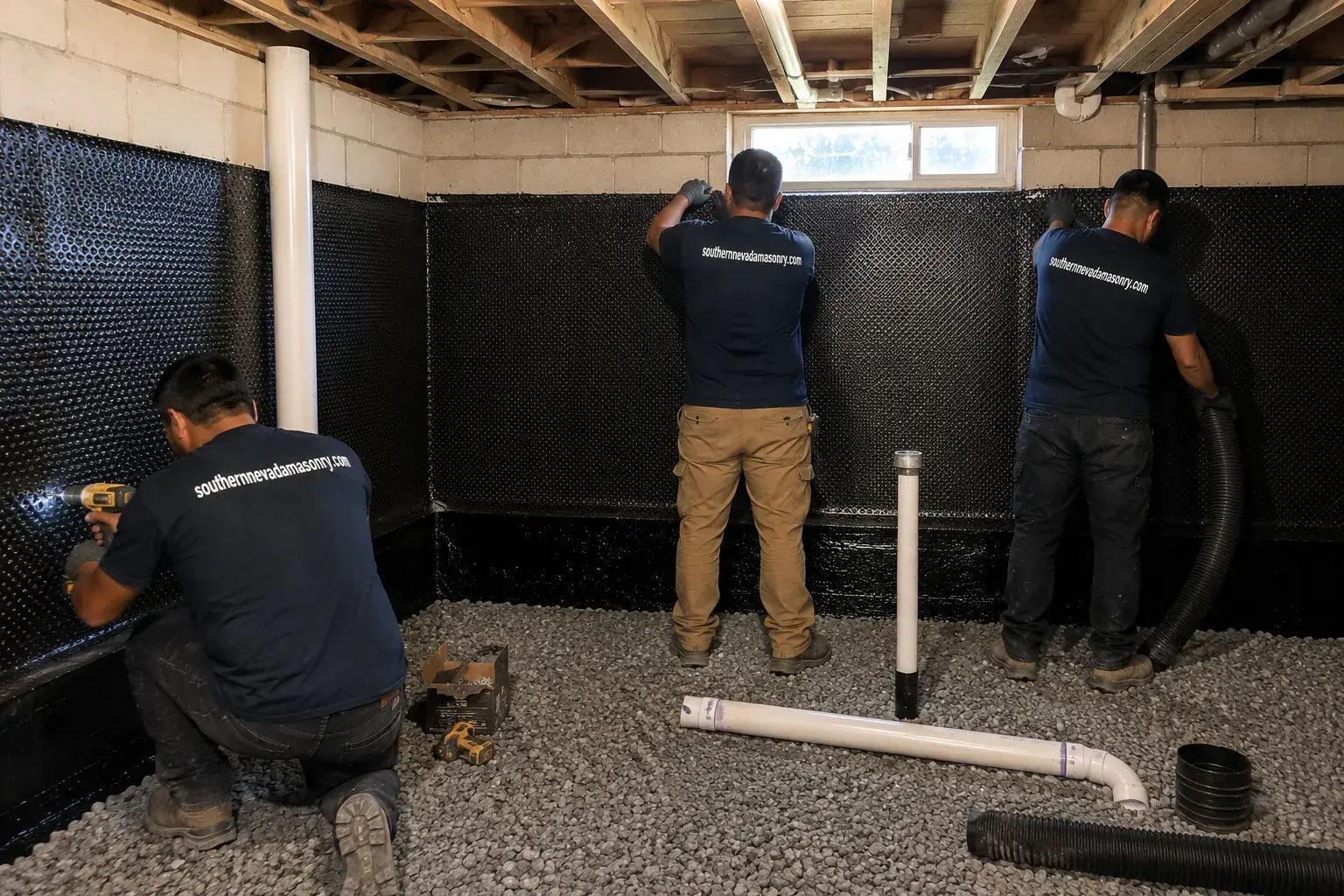

Best Crawl Space Vapor Barrier in Gustine, CA
A vapor barrier almost never fails in the middle of a sheet. It fails where two sheets meet, where the plastic reaches the wall, where it wraps a pier, and where a pipe passes through it. Four places, and every one of them is a detail a crew can rush. Anyone searching crawl space vapor barrier near me should be inspecting those four points, not the price.
Start with the seams, because there are more of them than you think. Most crawl spaces are wider than a single roll, so sheets are laid side by side.
Code says overlap at least six inches and seal or tape the joint. Good practice is twelve, lapped so the upper sheet sits over the lower one like roof shingles, which means water and vapor travel over the joint instead of into it.
Tape every seam. Not duct tape either, because it dries out and lets go underground within a few years. It needs a polyethylene compatible vapor tape, pressed down with a roller so no air is trapped under it.
The second failure point is the wall termination. Code requires the plastic to run at least six inches up the stem wall and be attached and sealed to the wall or the insulation on it. In practice that means butyl tape along the top edge and mechanical fasteners, masonry screws with washers or a termination bar, holding it there.
Skip that and vapor simply travels around the edge of your new barrier.
Third are the piers. Every interior support has to be wrapped and sealed, because an unwrapped pier is a column of damp masonry standing in the middle of a sealed floor, wicking moisture straight up into the framing.
Fourth are penetrations. Pipes, posts, drain lines, air conditioning lines. Each one gets cut tight and sealed with tape or mastic.
Now the material itself, which is where quotes in Gustine, CA diverge quietly.
Six mil polyethylene is the code minimum and it is genuinely thin. It tears while the installer is dragging it into position, it develops holes from anyone crawling on it later, and it breaks down over five to ten years. Twelve to twenty mil reinforced sheeting survives real use and lasts decades.
The difference in material cost is a couple hundred dollars. The difference in service life is fifteen years.
There is a rating that matters too. The code calls for a Class I vapor retarder on exposed earth in a sealed crawl space, and Class I means a permeance of 0.1 or less. Class II is up to 1.0 and Class III up to 10, so a product being labelled a vapor barrier does not automatically make it one. Ask for the perm rating.
The plastic goes on the ground, not stapled to the underside of the floor. That is a real mistake people make and it satisfies nothing.
One sequencing note. If you are also having radon work done, the vent pipe and its collection layer go in under the barrier, not through it afterward. Doing it in the wrong order means cutting your new liner open.
And in termite country the plastic should stop a few inches short of the sill plate, leaving a strip of bare foundation visible so an inspector can see it.
Coverage should be as close to 100 percent of the exposed dirt as the space allows, which usually means clearing out whatever has been stored down there first.
Expect roughly $0.15 to $0.50 per square foot for good reinforced material, with labor making up most of a finished job. A liner alone on an average crawl space around Gustine, CA typically lands between $1,500 and $4,000 depending on thickness and how much prep the space needs.
Ask to see the roll before it goes under the house, because the thickness is printed right on it.
We install vapor barriers across Gustine, CA and photograph every seam, wall termination and pier wrap before we leave. If you searched crawl space vapor barrier near me and want to know exactly what you are getting, call (833) 769-2615 and ask for the mil rating and the perm rating in writing.